
Commercial VRF & VRV Air Conditioning Systems Melbourne
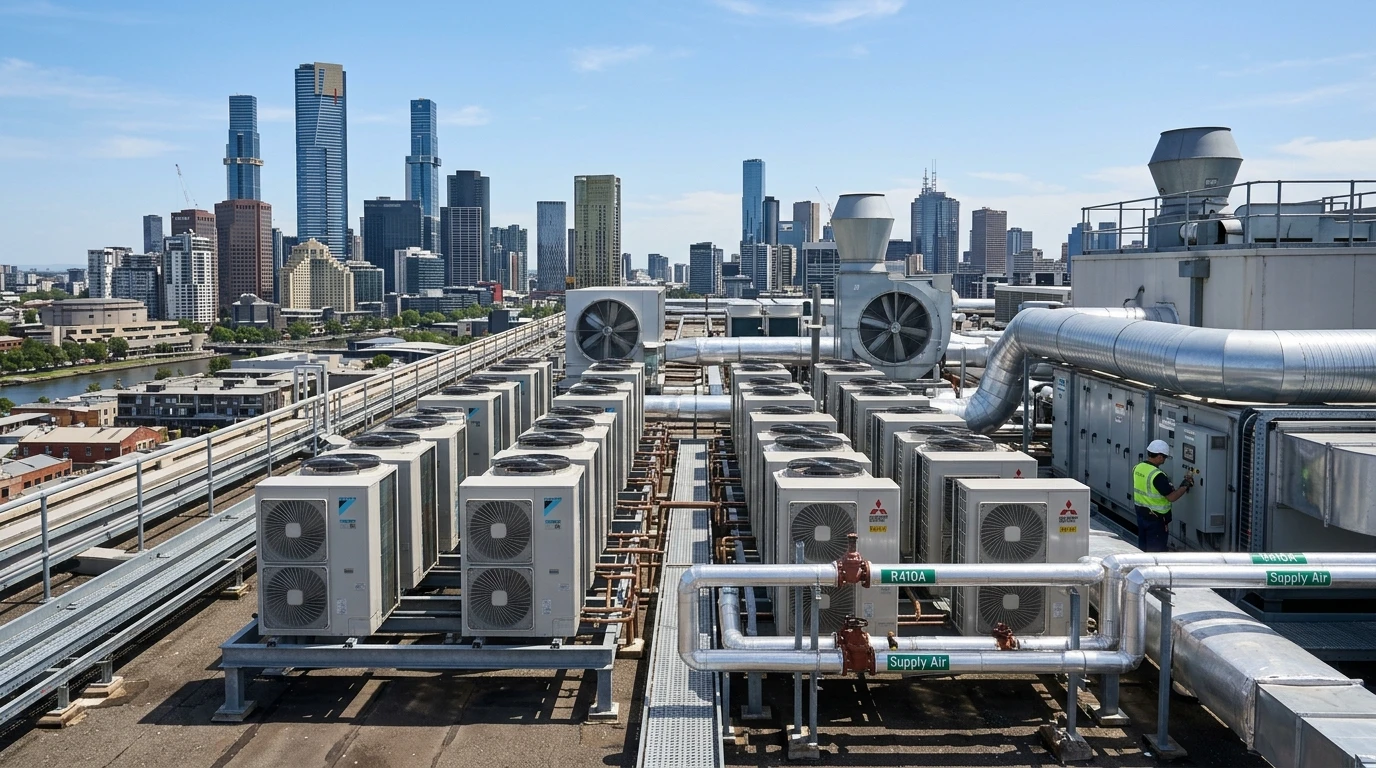
Variable Refrigerant Flow (VRF) and Variable Refrigerant Volume (VRV) systems represent the benchmark in modern commercial climate engineering. Designed for multi-storey office complexes, healthcare clinics, retail shopping centres, and premium hospitality venues, VRF technology delivers pinpoint temperature management across dozens of independent zones while utilizing a single, compact condenser plant.
At MGA Cooling, our certified commercial HVAC engineers specialize in turnkey VRF design, hydraulic balancing, and mechanical installation across Greater Melbourne. Whether engineering a 3-pipe heat recovery system capable of simultaneous heating and cooling or upgrading legacy commercial plant, we deliver whisper-quiet comfort, low operational costs, and complete Building Management System (BMS) integration.
Commercial Sectors & Building Types Suited for VRF / VRV
VRF systems provide unmatched flexibility for commercial facilities with varying solar exposures, dense tenant partitions, and continuous mechanical run hours:
Corporate Multi-Storey Offices
Conditions north-facing glass perimeter zones and internal meeting rooms independently, eliminating office temperature debates while dramatically reducing energy waste.
Medical Suites & Specialist Healthcare
Delivers whisper-quiet operation in consultation rooms with continuous fresh air exchange and compatibility with high-grade antimicrobial filtration systems.
Retail Showrooms & Multi-Store Centers
Supports extended piping runs of up to 1,000 meters total system length, allowing condensers to be placed discreetly on roofs or remote loading docks.
Hospitality & Boutique Hotels
Simultaneous 3-pipe heat recovery transfers waste heat extracted from guest rooms or kitchens directly into domestic hot water or shaded dining zones.
Educational Campuses & Training Facilities
Rapidly shifts cooling capacity between occupied lecture halls, administration suites, and IT server computer labs without running idle plant.
Comprehensive VRF / VRV Mechanical Engineering Scope
From initial mechanical engineering take-offs to crane plant rigging, our in-house commercial team manages every stage under strict VBA compliance:
Our End-to-End VRF Engineering & Installation Process
We follow a structured engineering workflow to ensure zero disruption to existing tenancies and complete mechanical compliance:
Tenancy Mechanical Audit & Thermal Sizing
We inspect architectural drawings, evaluate glass solar gain, occupant density, and fresh air ventilation volumes to calculate exact heat-load requirements.
Refrigeration Schematics & Equipment Specification
Our engineers design optimal piping layouts, specify branch selector boxes, and coordinate electrical sub-board capacities and roof plant load-bearing specs.
Plant Logistics, Crane Rigging & Pipework Rough-In
We manage council permits, traffic control, and crane lifts to position heavy condensers, followed by neat indoor fan coil and refrigeration pipework rough-in.
Nitrogen Pressure Testing & Triple Evacuation
All brazed copper lines undergo mandatory high-pressure nitrogen hold tests (24-hour verification) and deep vacuum pull-down below 500 microns.
BMS Commissioning, Airflow Balancing & Handover
We calibrate electronic sensors, program central touchscreens, balance air registers, and deliver complete operation manuals and compliance certificates.
What Drives Commercial VRF & VRV System Investment Costs
Every commercial building presents unique engineering constraints. Key variables influencing commercial project estimates include:
2-Pipe Heat Pump vs. 3-Pipe Heat Recovery
3-pipe systems involve additional branch selector boxes and piping but allow simultaneous heating and cooling with significant long-term power bill reductions.
Refrigeration Piping Length & Vertical Lift
Multi-storey risers requiring structural penetrations, fire-rated collars, and extended copper runs require specialist rigging and additional refrigerant charge.
Roof Plant Cranage & Council Road Closures
High-density commercial precincts in Melbourne CBD, South Yarra, or Richmond often require weekend mobile crane permits and traffic management.
Building Management System (BMS) Gateways
Centralized computer monitoring via BACnet or Modbus interfaces provides comprehensive energy reporting but requires specialized software configuration.
Tier-1 Manufacturers, Standards Compliance & Warranty
MGA Cooling installs only proven commercial VRF hardware backed by robust Australian warranties and Victorian regulatory standards:
Authorized Commercial Manufacturers
- Daikin VRV (VRV IV & VRV 5 Series)
- Mitsubishi Electric City Multi (Y-Series & R2 Heat Recovery)
- Panasonic ECOi Commercial VRF
- Carrier Commercial Systems
Australian Standards & Regulatory Codes
- Strict adherence to AS 1668.2 (Mechanical ventilation in buildings)
- AS/NZS 5149 compliance for refrigerant safety and concentration limits in enclosed spaces
- VBA registered plumbing and electrical safety certificates issued upon commissioning
- Fully qualified ARCtick certified commercial refrigeration mechanics
- 7-Year Workmanship Warranty (subject to applicable terms and conditions)
Frequently Asked Questions: VRF-VRV-Commercial
Clear answers regarding commercial engineering, operational efficiency, regulatory compliance, and installation timelines.
Related Commercial HVAC Capabilities
Browse our wider commercial engineering services or return to the main commercial hub.
View all 6 commercial climate disciplines, verified project photos, and industry sector summaries.
View Commercial HubTurnkey mechanical climate solutions and custom sheet metal ductwork for Melbourne businesses.
Explore ServiceIndependent tenancy zoning dampers and smart touchscreens to end office temperature debates.
Explore ServiceReady for a Commercial Mechanical HVAC Assessment?
Speak with MGA Cooling's licensed commercial engineers today. Request an itemized tender submission, mechanical take-off, or on-site consultation.